

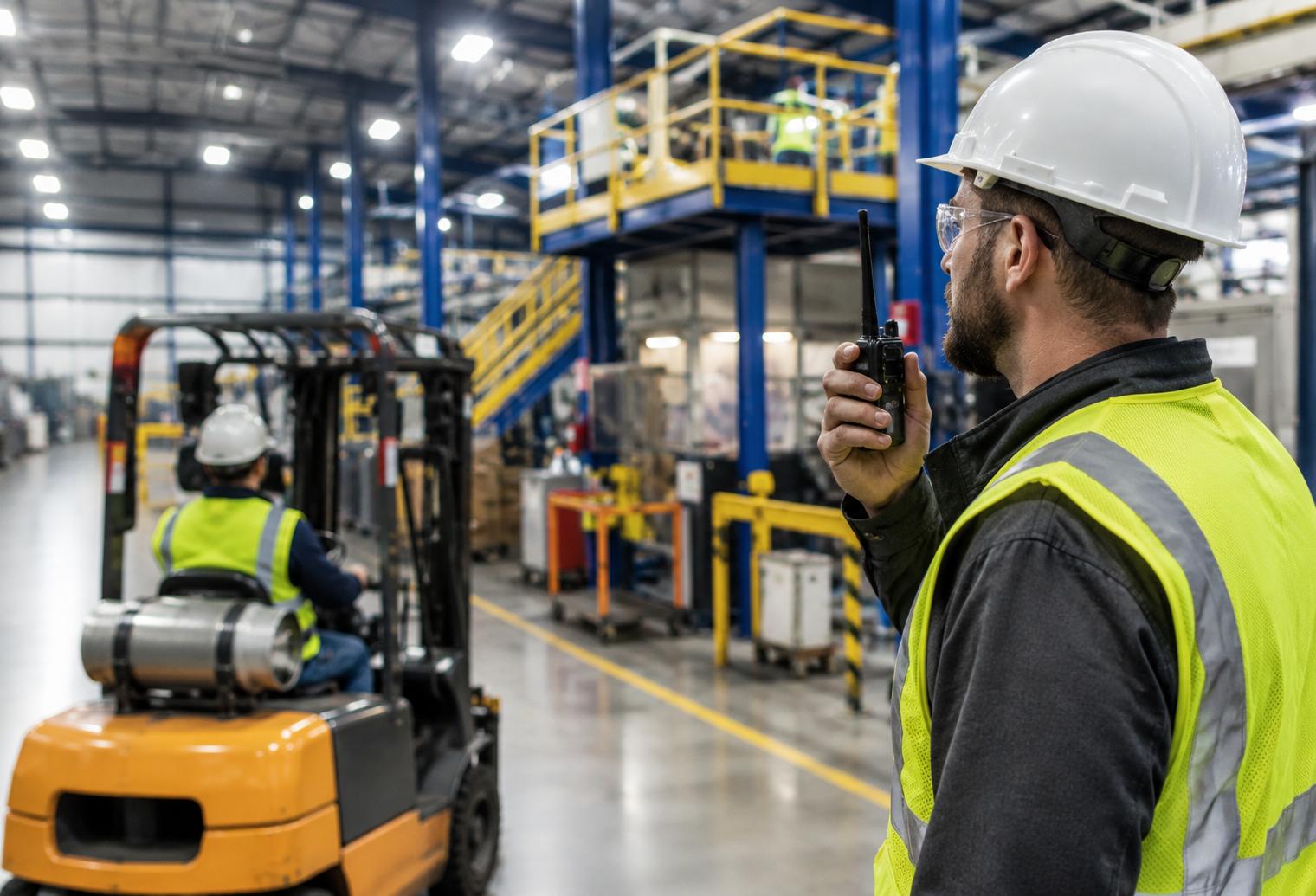
Large facilities depend on fast, reliable communication, especially when employees are spread across warehouses, production areas, offices, loading zones, and outdoor spaces. In Northern Colorado, facilities in and around Fort Collins also contend with large properties, changing weather, concrete and steel construction, and operations that may extend well beyond a traditional office environment.
Quick answer: Custom two-way radio networks can improve workplace safety and efficiency by giving employees a direct communication channel designed around the layout, coverage needs, and workflows of a specific facility. Rather than relying on a one-size-fits-all setup, businesses can evaluate where communication is needed, identify potential coverage challenges, and configure radio equipment and infrastructure around actual operations.
What Northern Colorado facility managers should know
-
A two-way radio network should be designed around the building and work environment rather than simply around the number of employees who need radios.
-
Warehouses, manufacturing spaces, and other facilities around Fort Collins may contain concrete walls, steel structures, equipment, shelving, and separated work areas that can affect radio coverage.
-
Northern Colorado operations with indoor and outdoor work areas may need coverage that extends to loading docks, parking areas, storage yards, and other exterior spaces.
-
Clear communication can help employees report hazards, coordinate work, request assistance, and respond to operational problems more quickly.
-
Testing coverage throughout the facility is an important part of determining whether the selected radio system meets real-world communication needs.
Why Do Custom Two-Way Radio Networks Matter in Northern Colorado Facilities?
Custom two-way radio networks matter because facility communication requirements vary significantly by property size, construction, staffing patterns, and daily operations. A system designed for the actual environment can help employees communicate across the areas where work takes place instead of relying on assumptions about radio coverage.
Northern Colorado includes a mix of manufacturing, distribution, construction, education, agriculture, and commercial operations. Facilities along the Fort Collins and Loveland corridor can range from compact commercial buildings to sprawling properties with multiple structures and outdoor work areas.
Regional conditions can add another consideration. Front Range weather can change quickly, and employees may need to coordinate between indoor and outdoor areas during snow, wind, thunderstorms, or periods of extreme temperatures.
Collins Communications Company is based in Fort Collins, and we help businesses evaluate communication needs and explore radio solutions suited to their operations.
What Should Facility Managers Look for When Evaluating Radio Coverage?
Facility managers should evaluate radio coverage based on where employees actually work, how teams move through the property, and which areas are most important during routine operations or emergencies. A useful assessment considers both obvious workspaces and less visible locations where communication gaps could create problems.
Potential trouble spots include stairwells, mechanical rooms, basements, loading docks, parking structures, storage areas, production floors, and spaces separated by dense building materials. Large warehouses in Larimer County or Weld County may also have tall shelving, machinery, or changing inventory configurations that influence how radio signals perform.
Professional field observation is especially useful here because a building plan alone cannot show exactly how a radio system will perform during everyday operations. Coverage testing within the actual facility provides a clearer picture.
How Can Two-Way Radios Improve Workplace Safety?
Two-way radios can improve workplace safety by allowing employees to communicate immediately with coworkers, supervisors, security personnel, or other designated teams. Direct push-to-talk communication can be particularly useful when a worker needs to report a hazard or request assistance without navigating multiple communication steps.
For a facility in Fort Collins, that might mean communicating from a loading area to a warehouse supervisor, coordinating employees during severe weather, or notifying another department about an equipment or access issue.
Radios do not replace a facility’s safety procedures or emergency plans. Instead, they can serve as one component of a broader communication strategy that helps employees share time-sensitive information.
What Warning Signs Suggest a Facility’s Communication System Needs Attention?
Communication problems deserve attention when employees regularly struggle to reach one another in areas where timely coordination matters. Repeated coverage gaps or inefficient workarounds may indicate that the current system no longer fits the facility.
Common warning signs include:
-
Employees regularly encounter radio dead zones.
-
Messages become difficult to understand in specific parts of the property.
-
Workers must leave their assigned areas to find reliable communication.
-
Teams rely on repeated calls or messages to confirm basic instructions.
-
Indoor coverage works adequately while outdoor areas remain unreliable.
-
Expansion or remodeling has changed the facility’s original communication needs.
-
Different departments use communication tools that do not support efficient coordination.
-
Employees cannot reliably reach appropriate personnel from remote areas of the property.
When Should a Northern Colorado Facility Call a Radio Professional?
A facility should consider professional assistance when coverage problems are persistent, operations have expanded, communication is safety-sensitive, or managers are unsure which equipment and infrastructure will fit the property. Professional evaluation can identify requirements that are difficult to determine by purchasing radios individually.
Managers can safely document where problems occur, which teams need to communicate, and which areas require coverage. They can also identify busy periods and situations where communication becomes difficult.
System design, coverage planning, equipment configuration, and more complex infrastructure decisions are better evaluated with professional guidance.
What Common Facility Conditions Can Affect Two-Way Radio Performance?
Building materials, distance, facility layout, equipment, and the relationship between indoor and outdoor work areas can all affect two-way radio performance. Northern Colorado facilities should therefore be evaluated individually rather than assuming equipment that works at one property will perform identically at another.
1. Dense building construction: Concrete, steel, and other substantial materials can make communication more challenging between separated areas.
2. Large facility footprints: Distribution, manufacturing, and industrial properties may require communication across considerable indoor and outdoor distances.
3. Multiple structures: Some properties around Fort Collins and nearby communities have detached buildings, yards, or work areas that expand the required coverage footprint.
4. Operational changes: New shelving, equipment, additions, or relocated departments can change how employees use a radio network.
5. Outdoor conditions: Teams working around yards, loading zones, or remote portions of a property may have different communication requirements than employees working inside the main building.
How Can Businesses Maintain More Reliable Radio Communications?
Businesses can support more reliable radio communications by routinely checking equipment condition, monitoring coverage complaints, maintaining batteries and accessories, and reassessing the system when the facility changes. Preventive attention is especially valuable before communication becomes an operational or safety concern.
Facility managers can periodically walk important work areas and document recurring problems. Batteries and charging equipment should also be monitored according to applicable manufacturer guidance.
Before seasonal weather or periods of increased activity along the Northern Colorado Front Range, businesses can review communication procedures so employees understand which channels and processes apply to routine and urgent situations.
What Results Can Businesses Expect From a Properly Planned Radio Network?
A properly planned radio network should provide communication that better matches the facility’s actual coverage requirements and operating workflows. Depending on the property and system selected, this can reduce unnecessary communication delays and make it easier for employees to coordinate across departments or work areas.
The goal is not simply to put more radios into employees’ hands. For Fort Collins facilities, effective planning means determining who needs to communicate, where communication must work, and how the network fits into everyday operations.
What Mistakes Should Facility Managers Avoid?
Facility managers should avoid selecting radio equipment solely on price or advertised range because real facility performance depends on the environment and intended use. Planning around actual coverage and workflow requirements provides a stronger foundation.
Mistake: Assuming advertised range equals facility coverage.
Consequence: Walls, structures, distance, and equipment may produce very different real-world results.
Better approach: Evaluate coverage in the actual operating environment.
Mistake: Planning only for indoor areas.
Consequence: Employees at loading docks, parking areas, or exterior work zones may encounter communication gaps.
Better approach: Include the entire operational footprint.
Mistake: Ignoring future facility changes.
Consequence: Expansion or reconfiguration can leave an existing setup poorly matched to operations.
Better approach: Reassess communication requirements as the property evolves.
What Is a Common Northern Colorado Facility Communication Scenario?
A common Northern Colorado scenario involves a facility where employees work across a main building, warehouse space, loading areas, and an exterior yard. The radios may perform acceptably in central work areas but become less dependable in isolated or distant sections of the property.
This is a representative scenario, not a Collins Communications Company case study. The appropriate solution depends on the facility, existing equipment, operating requirements, and results of a site-specific evaluation.
What Service Solutions Can Address Facility Communication Needs?
Facility communication needs can be addressed through a combination of appropriate two-way radio equipment, system planning, coverage evaluation, configuration, and supporting infrastructure when required. The right approach depends on the property’s physical environment and how employees need to communicate.
We can help businesses evaluate their current communication challenges and explore options designed around the facility rather than relying on a generic setup.
How Should Businesses Compare Their Two-Way Radio Options?
Businesses should compare two-way radio options based on coverage requirements, operational needs, facility characteristics, and long-term usability rather than selecting equipment solely from a specification sheet. A small commercial property and a large industrial facility may require very different approaches.
Off-the-shelf equipment may be adequate for straightforward communication needs. A professionally planned system becomes more valuable when a Fort Collins property has difficult coverage areas, multiple buildings, safety-sensitive operations, or teams that depend heavily on immediate communication.
What Northern Colorado Areas Can Benefit From Facility Radio Planning?
Facility radio planning can support businesses throughout Fort Collins and the broader Northern Colorado region, including nearby Loveland, Windsor, Timnath, and surrounding parts of Larimer and Weld counties. Each property should be evaluated according to its own layout, operating environment, and communication requirements.
What Can Happen When Communication Problems Are Ignored?
Ignoring recurring communication problems can allow small inefficiencies to become routine and can make coordination more difficult when employees need information quickly. For local facilities, the impact may include unnecessary downtime, repeated trips across a property, delayed responses to operational problems, or difficulty reaching coworkers in important work areas.
Addressing known gaps before they become more disruptive gives managers an opportunity to build communication around how their teams actually operate.
FAQ
Do large Fort Collins facilities need custom two-way radio systems?
Large Fort Collins facilities may benefit from custom planning when employees need dependable communication across warehouses, production areas, multiple floors, exterior spaces, or separate buildings. Facility size alone does not determine the solution. Layout, construction materials, workflow, and required coverage areas should all be evaluated before equipment is selected.
Can warehouse construction affect radio coverage in Northern Colorado?
Yes. Warehouse construction and interior configuration can affect radio performance. Concrete, steel, tall storage systems, machinery, and long distances may influence coverage within Northern Colorado facilities. Because properties differ, testing and planning around the actual environment is more useful than assuming a radio will perform according to an idealized range estimate.
Should outdoor areas be included in a Fort Collins radio coverage assessment?
Yes. Outdoor areas should be included whenever employees regularly work or travel through them. A Fort Collins facility may need communication across loading docks, parking areas, equipment yards, storage areas, or routes between buildings. Leaving these locations out of the assessment can result in a network that works indoors but misses important operational areas.
Can two-way radios help during Northern Colorado severe weather?
Two-way radios can support a facility’s established severe-weather communication procedures by allowing designated employees to share information quickly. Northern Colorado can experience snow, thunderstorms, wind, and rapidly changing conditions. Radios should complement, rather than replace, documented emergency procedures, employee training, weather monitoring, and other appropriate safety systems.
How often should a facility review its radio coverage?
A facility should review radio coverage when employees report recurring problems or when significant operational or physical changes occur. Remodeling, expansion, new equipment, relocated departments, and changes to outdoor work areas can all justify another evaluation. Periodic checks can also help managers identify developing issues before communication becomes more disruptive.
Are two-way radios useful for facilities outside Fort Collins?
Yes. Two-way radios can support many types of facilities throughout Larimer County, Weld County, Loveland, Windsor, Timnath, and other Northern Colorado communities. The appropriate equipment and network design depend on the individual property, so nearby businesses should not assume that a configuration used at another facility will automatically fit their needs.
Is buying more powerful radios always the solution to coverage problems?
No. Coverage problems should be evaluated before assuming different radios alone will solve them. Facility layout, building materials, distance, system configuration, infrastructure, and operating requirements can all influence performance. Identifying where and why communication fails provides a better basis for choosing an appropriate solution.
What information should I gather before requesting a radio system evaluation?
Start by documenting the number and types of employees who need radio communication, important indoor and outdoor coverage areas, known dead zones, existing equipment, and typical communication workflows. Facility maps or basic layout information can also be useful. This gives a radio professional a clearer understanding of the property’s operational requirements.
Build Better Communication Across Your Northern Colorado Facility
Reliable workplace communication starts with understanding the facility, the people using the system, and the areas where communication matters most. We can help Fort Collins and Northern Colorado businesses evaluate their needs and explore two-way radio solutions suited to their operating environments.
Improve Safety, Coordination, and Communication Across Your Facility
Get a communication solution built around the way your team and property actually operate.