

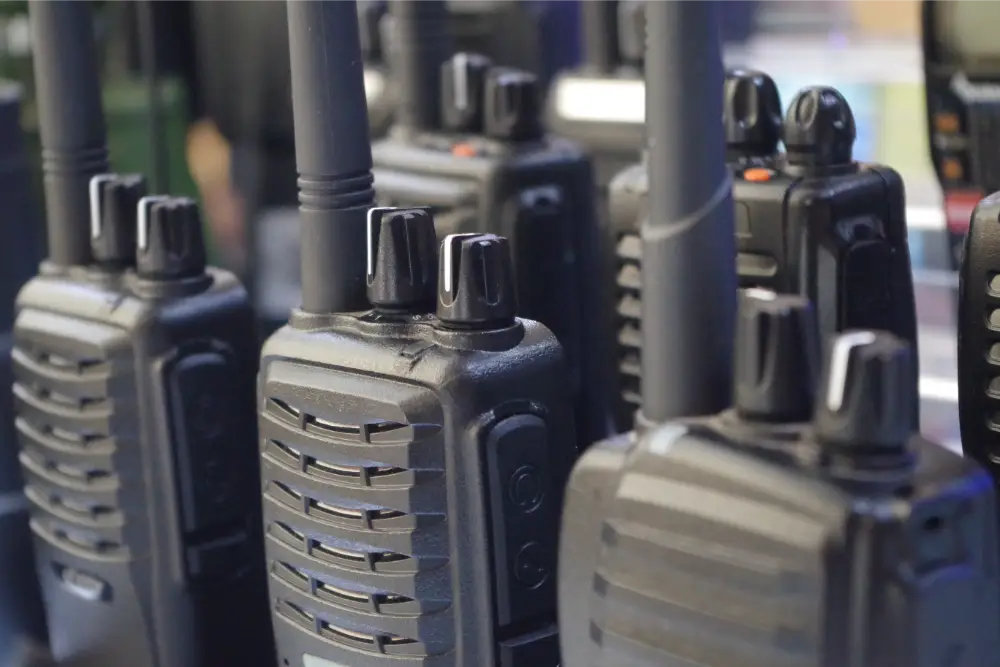
When your team depends on fast, reliable communication to get the job done, the tools you choose can make or break your operation. Whether you manage a construction crew, run a hospitality property, or oversee a large warehouse, investing in the right radio communication equipment is one of the most important decisions you can make. Businesses in cities like Fort Collins, CO and across the country are discovering that modern two-way radios for business are far more capable than older systems, and that selecting the right commercial communication systems requires a clear understanding of your specific needs.
This guide walks you through five key considerations to help you make a smart, informed choice.
Understanding Your Environment and Coverage Needs
Before you can choose the right equipment, you need to take an honest look at where your team operates. VHF (Very High Frequency) radios are ideal for open, outdoor environments like farms, golf courses, and construction sites, since they provide long-distance communication with minimal obstructions. UHF (Ultra High Frequency) radios, on the other hand, perform better indoors or in built-up areas like office buildings, hotels, and warehouses.
If your business spans multiple buildings or floors, coverage gaps can become a serious problem. When cellular networks get overloaded or experience dead zones, which is common in facilities with thick walls and metal structures, dedicated radio frequencies remain reliable. That reliability is precisely why so many businesses continue to favor purpose-built radio communication equipment over smartphones or consumer-grade devices.
For companies in Fort Collins, CO and the surrounding region, outdoor terrain and large facility footprints can further complicate coverage. Repeater systems can help extend range significantly, allowing your two-way radios for business to reach across large campuses or multiple jobsite locations without sacrificing clarity.
Analog vs. Digital: Which Technology Is Right for You?
One of the most consequential decisions in choosing commercial communication systems is whether to go with analog or digital radio technology. Both have their place, and the right choice depends heavily on your business size, industry, and long-term communication goals.
Digital systems provide encrypted communication and data capabilities, while analog alternatives offer simplicity and lower upfront costs. For businesses that handle sensitive information, or that need to maintain a log of communications for compliance purposes, digital is usually the stronger investment.
Some radios offer the flexibility to operate in either analog or advanced digital mode, which is ideal for companies transitioning their fleet from analog to digital. This allows for backward compatibility while upgrading to superior digital audio quality. This kind of phased approach protects your initial investment while preparing your team for more advanced commercial communication systems down the road.
If your operation is relatively simple and your team works within a limited area, analog radios can still be a cost-effective and dependable solution. However, most businesses with growth plans should consider digital radio communication equipment from the start.
Matching Equipment to Your Industry
Not all two-way radios for business are designed the same way, and matching the right device to your industry can have a significant impact on performance and durability. Two-way radios are essential across sectors, including retail and hospitality to enhance guest service and reduce wait times, security and property management to coordinate response teams instantly, logistics and transportation to keep drivers and dispatch connected, and healthcare and education to maintain clear and secure communication without disrupting sensitive environments.
For businesses in demanding physical environments, durability is a non-negotiable feature. Industrial radios often last 12 to 24 hours on a single charge, which is crucial during long shifts or emergencies. That kind of all-day battery performance is something consumer devices simply cannot match.
If your operation requires communication logging for audit purposes, lone worker protection, or emergency alert functionality, you should make sure those features are built into the system you choose. Industries like healthcare, construction, and utilities often have specific regulatory requirements that make these advanced features essential rather than optional.
Businesses in Fort Collins, CO that operate in sectors like agriculture, manufacturing, or outdoor services should pay particular attention to weather resistance ratings and rugged housing. Investing in radio communication equipment built for your specific conditions will save money on replacements and repairs over time.
Licensing, Costs, and Scalability
One area that many businesses overlook when evaluating commercial communication systems is the regulatory and financial side of ownership. Depending on the type of radio communication equipment you choose, you may need to obtain an FCC license before your team can legally operate on certain frequencies.
You can choose between traditional VHF/UHF systems requiring FCC licenses or license-free options operating on public frequencies. License-free radios are appealing for smaller operations, but they often share frequencies with other users, which can create interference problems in busy commercial areas.
With purpose-built business radio systems, there are no monthly service fees, no data plans, and no per-user charges. You buy the equipment once and you are done. This cost structure makes two-way radios for business particularly attractive compared to cellular-based solutions, especially for teams with a large number of users.
Scalability is another factor worth planning for early. As your business grows, your communication infrastructure should be able to grow with it. Consider your team’s geographic spread first, since operations spanning multiple states need cellular push-to-talk options while single-location businesses often perform well with traditional frequencies. Choosing a platform that allows you to add units, expand coverage with repeaters, or integrate with dispatch consoles will give your business the flexibility it needs.
Choosing a Trusted Vendor and Support Partner
Even the best radio communication equipment is only as good as the support system behind it. When evaluating vendors for your two-way radios for business, look for companies that offer programming, maintenance, and training as part of their service package.
Some vendors supply portable radios, mobile units, and base stations from leading manufacturers configured to your specifications, with additional services including radio programming, repair services, and equipment rentals for temporary needs. Having a vendor that understands your industry and can configure equipment before delivery is a major advantage, especially for complex deployments.
The environment, coverage, licensing, scalability, and safety requirements all play a major role in selecting the right two-way radio system, and working with an experienced partner who can match your operation with a system that genuinely fits makes all the difference.
For businesses in Fort Collins, CO, partnering with a local or regional communications provider can also simplify site surveys, on-site maintenance visits, and compliance support. Local expertise in terrain, building types, and regional regulatory requirements can be invaluable.
Conclusion
Choosing the right radio communication equipment is not a one-size-fits-all process. By evaluating your environment, technology preferences, industry requirements, budget, and vendor options, you can build a commercial communication system that genuinely serves your team. Whether you are a growing business in Fort Collins, CO or managing operations across multiple locations, investing in the right two-way radios for business today will pay dividends in efficiency, safety, and reliability for years to come.
Need a Satellite Communication Service Near You?
At Collins Communications Company, we’re proud to be your trusted local partner in keeping your world connected. Since 1986, our family-owned business has been dedicated to providing reliable, innovative communication solutions across Fort Collins and beyond. Whether you need expert system design, equipment leasing, FCC licensing assistance, or professional installation and maintenance of Radio Systems, Public Safety DAS, Microwave, and Satellite Links — we’re here to help. With two full-service radio shops, a large fleet of rental radios, and a passion for supporting our community, we’re ready to meet your communication needs. Reach out to us today and let’s enhance your communication capabilities together!